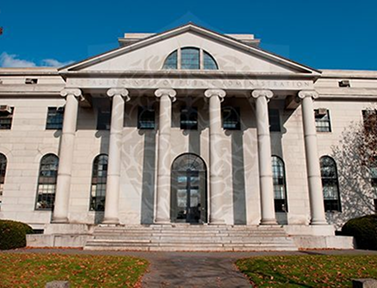
Got your sights set on Princeton? This guide covers admissions deadlines, essay tips, interview insights, acceptance rates, and everything you need to know about how to get into Princeton.
You may have your sights set on Princeton University, the nation’s top-ranked school. Princeton no longer publishes an admission rate, but admission is extremely competitive.[1] Each year, tens of thousands apply, and only a select few are admitted. Located in Princeton, New Jersey, the university has 5,600 undergraduates who mostly live on campus in residential colleges that foster academic and social connection. With a close-knit, intellectually driven community and access to major cities like New York and Philadelphia, Princeton offers both tradition and opportunity.
Princeton looks for students who pursue ideas with intensity and independence. The strongest applicants show signs of thinking that goes beyond the classroom. This might include research, creative problem-solving, or a deep interest developed on their own. Curiosity should be a habit, not just a highlight.
Princeton values students who act with intention. They look beyond titles to see how you’ve made an impact, especially in ways that reflect your personal values. Whether you launched a community initiative or built something on a small scale, what matters is the thought and effort behind it.
Princeton admissions pays close attention to how you process your experiences. The best applicants show clarity about what matters to them and why. They are honest, self-aware, and guided by a sense of responsibility to others. Character and reflection carry real weight in this process.
3.96
1490-1560
34-35

Based on information published by Princeton University’s admissions office.[3]
Princeton is test-optional for the 2026-27 admissions cycle, so you don’t have to submit SAT or ACT scores, and Princeton says you won’t be at a disadvantage if you don’t. That changes next year: Princeton will require an SAT or ACT score from the 2027-28 cycle onward, starting with students who enroll in fall 2028.
If your scores fall within or above these ranges, submitting them could strengthen your application. If they are lower, you may apply test-optional this cycle.
Princeton requires two teacher recommendations and one counselor recommendation to gain insight into your academic performance and classroom contributions.[4]
A well-crafted recommendation can highlight your intellectual curiosity, work ethic, and impact in the classroom, reinforcing your fit for Princeton.
Princeton values students who do more than just join clubs—they seek leaders, creators, and problem-solvers. Your activities should reflect initiative, community impact, and a willingness to go beyond the expected. Whether you’ve started a project, led a team, or built something original, show how your experiences align with Princeton’s collaborative and leadership-focused environment. Here’s what a weak vs. strong profile looks like:
| Less Competitive Applicant | Competitive Applicant | |
|---|---|---|
| Student Government | Member, no leadership | VP, launched a sustainability project |
| Debate Club | Local competitions, no major achievements | State finalist, mentored younger members |
| Community Service | Occasional volunteering, no sustained impact | Founded a STEM tutoring program |
| Soccer Team | JV player, no leadership | Varsity captain, organized a fundraiser |
| Part-Time Job | Worked weekends, no advancement | Shift leader, managed employee schedules |
| Why It Falls ShortLacks leadership, initiative, and long-term commitment. | Why It Stands OutDemonstrates leadership, initiative, and tangible impact. |
In addition to your personal statement, Princeton asks its own set of questions, called the Princeton-specific Questions. Your answers should show what you know about Princeton and why you want to go there.[5]
For the 2026-27 admissions cycle, applicants answer six questions in three groups:

Even though there’s no direct “Why Princeton?” essay, understanding what makes the school unique is crucial. Explore majors, extracurriculars, and traditions like eating clubs and the Carl A. Fields Center—you’ll likely need this knowledge for an interview or essays.
Princeton’s Single-Choice Early Action (SCEA) acceptance rate is significantly higher (13.9% vs. 5.8% overall). Applying early shows strong interest and gives you a statistical advantage, though Princeton remains highly competitive.
Princeton looks for students who excel academically and in extracurriculars, but essays play a huge role in demonstrating how you’d contribute to campus.
Approach your application with a clear, unique angle that sets you apart. Princeton has no set formula for admission, but by excelling in and out of the classroom, crafting compelling essays, and researching the school deeply, you’ll maximize your chances.

With thousands of top students applying each year, Princeton seeks more than just strong academics—it looks for applicants who embody its values and thrive in its rigorous environment. Competitive Princeton applicants typically demonstrate:
If you’re a student who thrives in intellectual depth, independent research, and service-driven leadership, Princeton could be the perfect fit for you.
College Admissions Counseling Results: Princeton
By providing your contact information and clicking ‘Submit’, you give your consent to receive calls, emails, and texts from InGenius Prep to your provided number and email with reminders and other information about our services via live agent, automated SMS, or prerecorded messages. Consent is not a requirement of purchase and you may opt out from our text, phone, and email communications at any time.
Our services are tailored to your student’s needs. Build the perfect profile with our Princeton Admissions experts.
Strategize early, build your profile, and stand out from your peers.
Conduct a mentorship with a Professor, Researcher, or Scholar from a U.S. university in your
academic area of interest.
Launch a business, organization, or platform with a Leadership and Entrepreneurship Expert.
Build your college applications from scratch to perfection to 7x your admissions chances.
We’ll help you refine and polish your entire application to highlight your academic achievements, extracurricular activities…
Find educational content to learn about elite college admissions in the United States
Princeton’s application deadline for Regular Decision is typically January 1st, and for Single-Choice Early Action, it is usually November 1st.[3]
Decisions for Single-Choice Early Action are generally released in mid-December, while Regular Decision notifications are sent out in late March. You reply by May 1.
Interviews at Princeton are optional and run by alumni volunteers. You may opt out in the Princeton-specific Questions. Alumni reach most applicants, but none is guaranteed.[3]
Princeton University has about 5,826 undergraduate students and about 3,280 graduate students.[1]
Princeton seeks students who demonstrate academic excellence, intellectual curiosity, and a commitment to extracurricular activities and community service. They value diverse perspectives and look for individuals who will contribute positively to the campus community.
Princeton is renowned for its strong emphasis on undergraduate education, its prestigious faculty, and its beautiful campus. It is also known for its rigorous academic programs, particularly in the fields of humanities, social sciences, natural sciences, and engineering. Students can find more information from their school counselors.
According to the most recent data (2022), the top Princeton majors are as follows: